PORTUGUÊS
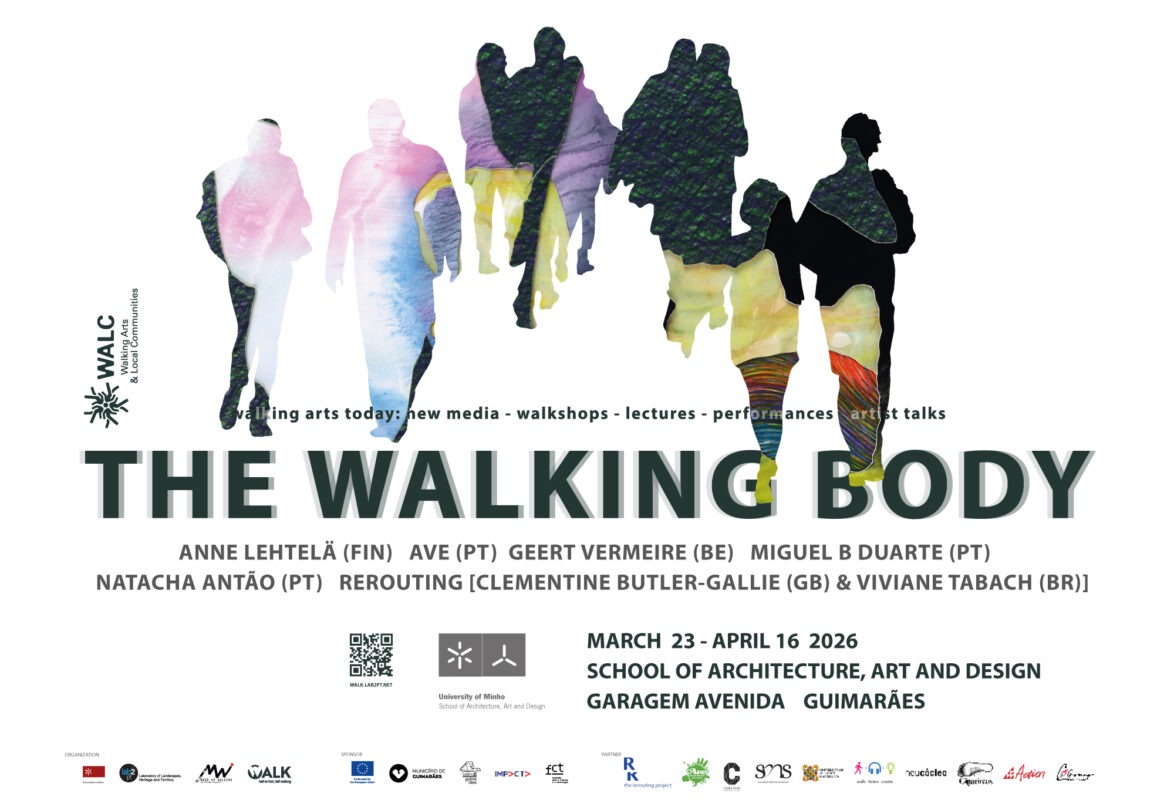
Footnotes to Freedom
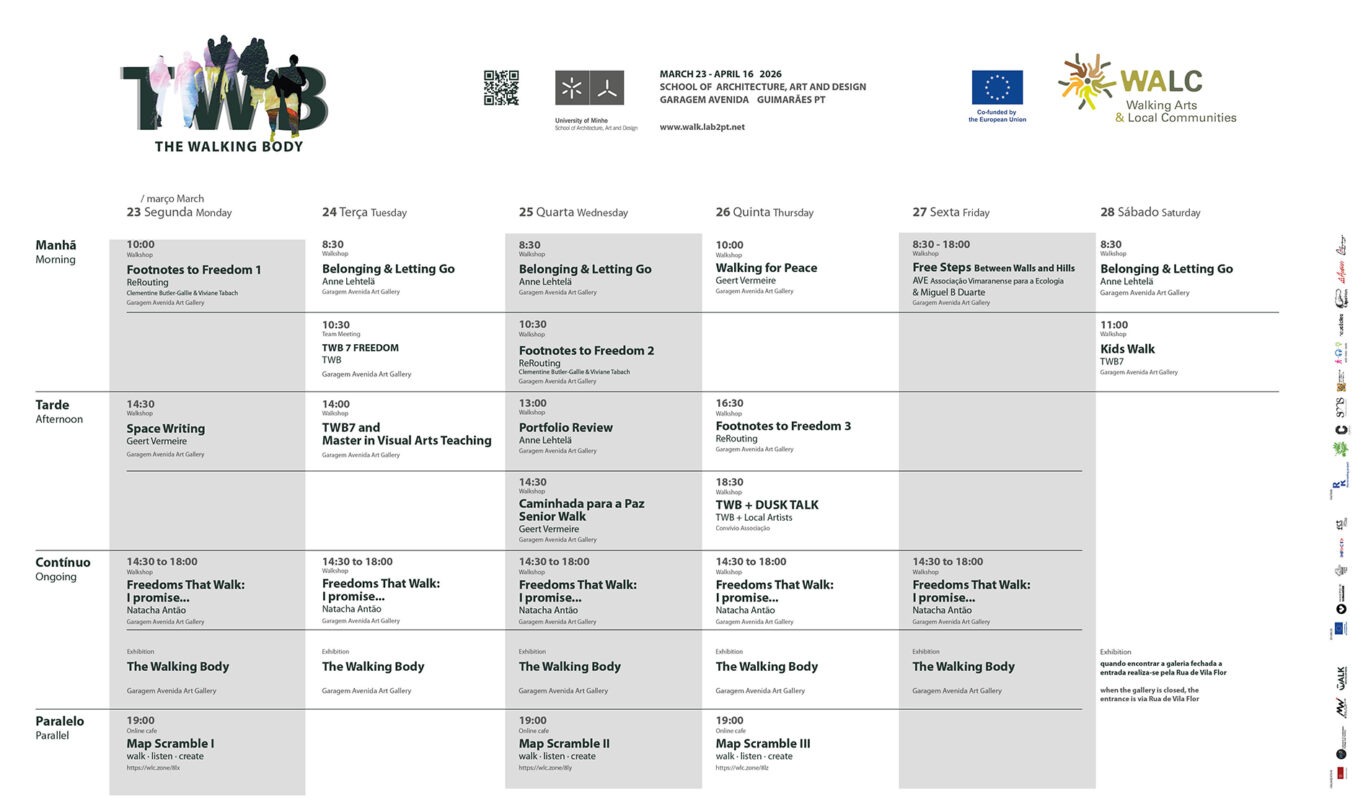
Footnotes to Freedom is a three-part workshop series that explores how experiences of freedom are located, felt, and expressed in the city of Guimarães. Combining mapping, conversation, clay work, and the collective production of a performative walk, this workshop transforms reflections on freedom into a shared public gesture. Participants are invited to reflect on where and how they experience freedom in urban space and how these moments connect to broader questions of access in public space.
Workshop 1: Searching Freedom in the City
(Monday 23.03, 10 AM. 2 hours)
Where in Guimarães do you experience a sense of freedom and what makes it possible? We will share, discuss, and map responses together. Expanding from a collection of prepared references, the group will then produce written “footnotes to freedom”: fragments, quotes, scores, drawings and noted observations that emerge from the conversation.
Workshop 2: Tracing Freedom with Clay
(Wednesday 25/25.03, 10:30AM. 2.5 hours)
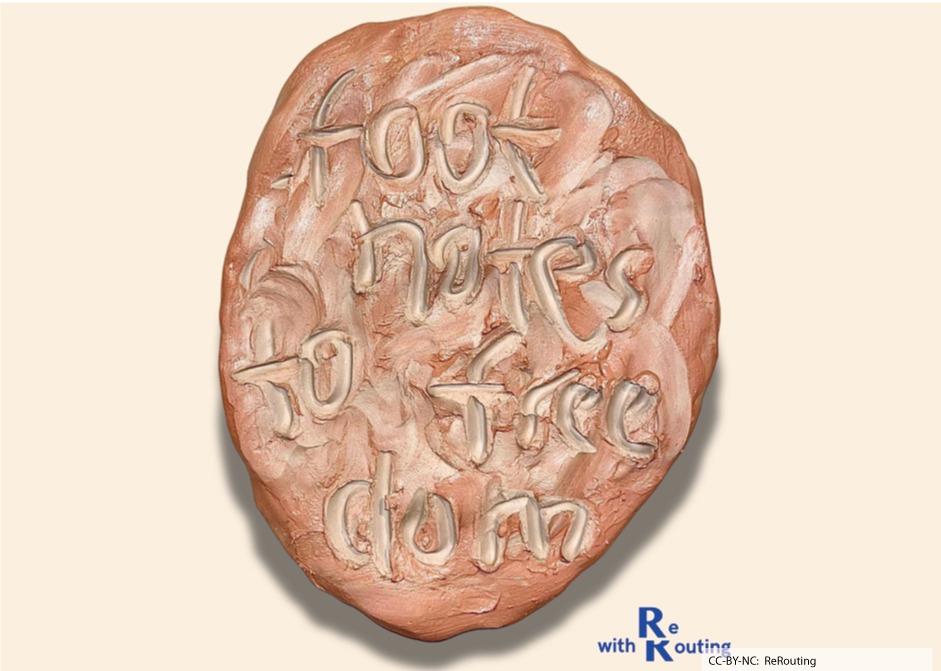
This workshop investigates freedom through the materiality of clay. Working with the material, participants are invited to reflect on their places of freedom and translate aspects of these experiences into forms, traces, text, or gestures on the surface. The resulting works will be collectively assembled into a single installation, to be presented in the university’s exhibition space.
Workshop 3: Setting the Pieces Free
(Thurday 26.03, 4:30 PM. 1.5 hours)
In a collective walk from the Galeria da Garagem Avenida space to Associação Convívio, participants set the clay work free in public space. Each placement is accompanied by the performance of a footnote (spoken, acted, or simply placed). The clay pieces and footnotes are photographed, forming an archive of this co-authored performative walk whilst the pieces live on in-situ.
Number of participants:
Duration:
Materials:
Meeting point: Gallery Garagem Avenida
Meeting time:
Space Writing – Peace Walk
Inspired by Michel de Certeau’s reflection that “Walkers write the text of the city, without being able to read it,” this workshop proposes walking as a collective act of writing — with the body, in space, and across scales. The walkshop invites participants to explore Guimarães not through a panoramic, cartographic gaze, but through embodied inscription.
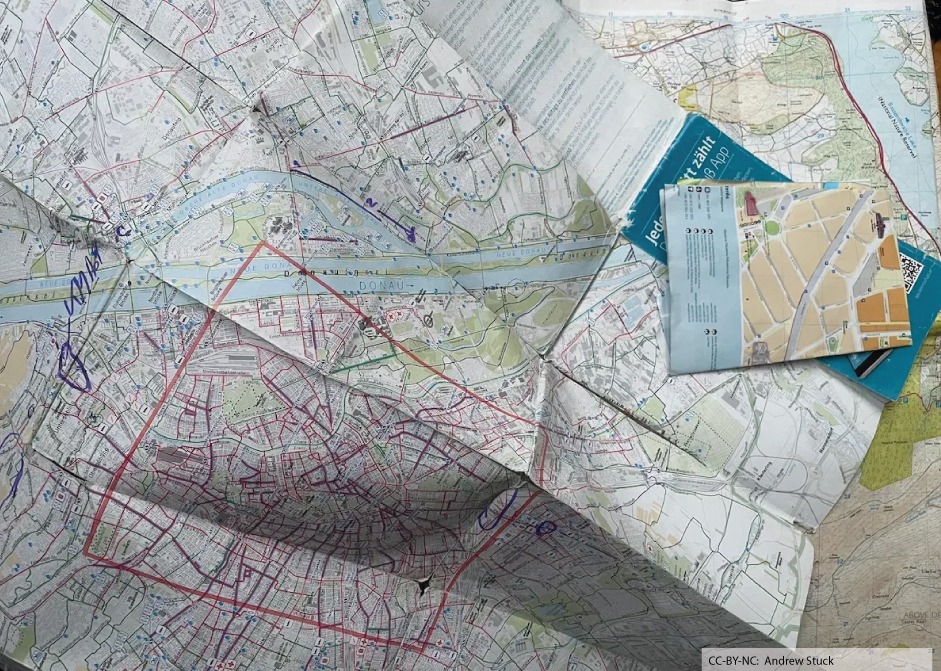
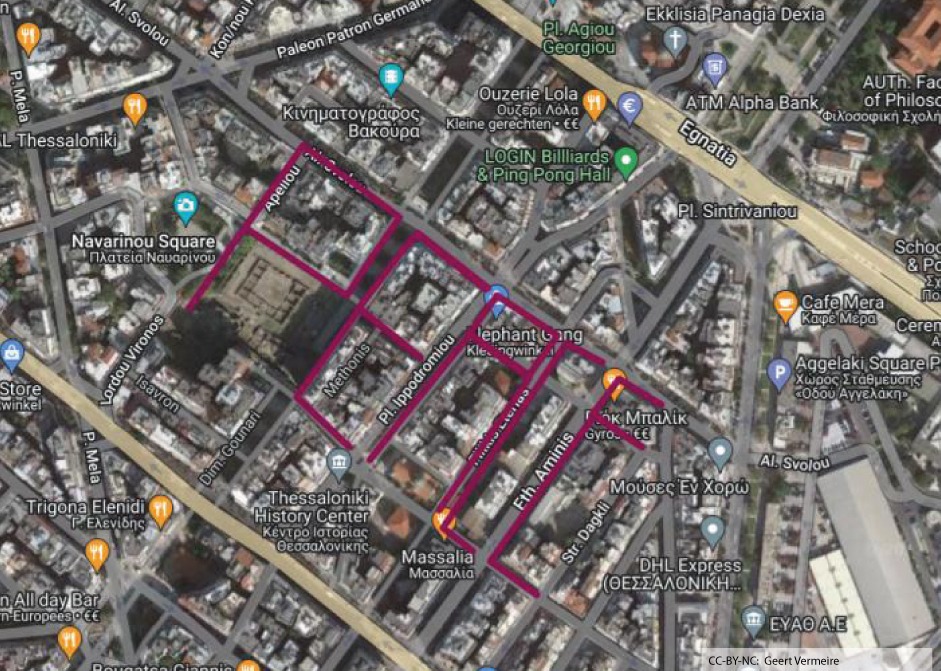
During the workshop, participants first engage with the city digitally, tracing the letters of the word Peace (in their own language) onto a map of Guimarães. These drawn letters become spatial itineraries. The urban layout, usually perceived as fixed and univocal, is transformed into a field of possibilities — open, relational, and affective.
Over several days, walkers follow these letter-forms physically through the city. On the final day, participants move silently through the streets — even in the rain — walking the word Peace. They do not merely read the map; they write it with their bodies. The collective walking body becomes a moving script across the skin of the city.
The map itself is reduced to a single word, challenging the conventional idea of mapping as panoptic and geometric. The route shifts direction, fragments, recomposes. Participants share the path spontaneously, carrying peace as a gesture rather than a slogan. What is written is a secret message, legible only through walking.
Extending beyond Guimarães, the workshop connects to an Earth Alphabet for Peace: participants worldwide draw and walk the word Peace in their own landscapes using Google Maps and CGeomap, generating a global, geolocated, locative media cartography — a planetary choreography of embodied writing.
Walking becomes both intervention and invitation: a performance between fiction and reality, and a collective reimagining of urban and earthly space.
Number of participants:
Duration:
Materials:
Meeting point: Gallery Garagem Avenida
Meeting time:
Freedoms that Walk: I promise…
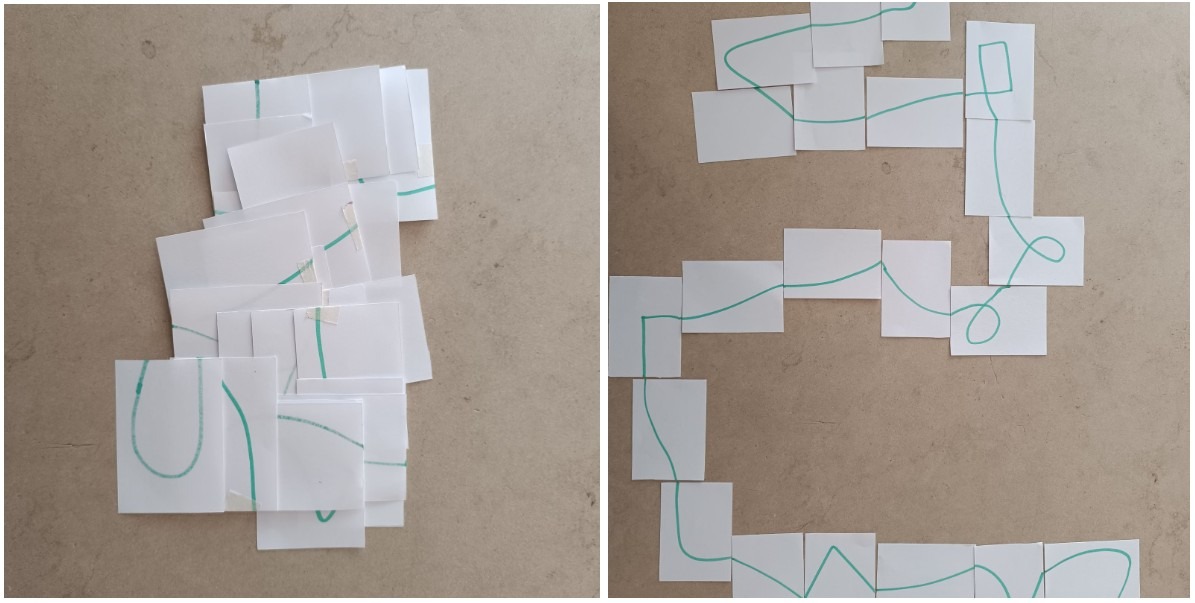
There is a starting point. A blank sheet of paper. A gesture. A promise.
In this ongoing workshop, each participant is invited to write, draw, or inscribe a promise—whether personal or collective, fragile or impossible. Each promise now lives on a sheet of paper, all sheets are the same size and are fixed to a common wall. Each new promise must connect to another existing one through a line, creating a living cartography where no freedom remains isolated.
Here, to promise is to commit oneself in a shared space. Interventions can bring together, contradict, overlap, or tear apart. Each gesture transforms the previous one. Freedom ceases to be an individual territory and becomes a relational practice.
Throughout the week, the wall is constructed as an unstable map of bonds and tensions. And there is still one decisive possibility: promises can be taken by others. Those who take them on assume the responsibility of continuing, keeping, or transforming what they did not write. What remains is a void, a trace, an absence that also becomes part of the design.
Losing, finding, taking, sharing.
Letting go as a form of compromise.
In the end, the remaining sheets will be gathered in a book-object—a trace of a collective journey where freedom is experienced as relationship, risk, and responsibility.
Participants nr: Open
Duration:
Materials:
Meeting point: Exhibition gallery Garagem Avenida
Meeting time:
Belonging & Letting Go:
Freedom Morning Running Club
3 mornings (e.g. Tuesday, Wednesday, Saturday, 8:30–9:45)
This morning running club combines gentle running with conversation. We will talk about the things we are “running into” in life — struggles, burdens, and experiences we wish to release and find freedom from. Each morning has its own theme, explored through discussion on both a personal and a societal level. The aim is to lighten the load by sharing and reflecting together.
Running takes place in a small group or in pairs, with groups naturally forming according to individual pace. The intention is to create a safe and supportive space for conversation while ensuring that everyone can move at a pace that feels comfortable for them.
Participants are warmly invited to suggest running routes and to introduce local terrain to the group if they wish.
Participants nr:
Duration: 1:15H*
Materials:
Meeting point: Art gallery Garagem Avenida
Meeting time: :30
*Duration: Approximately 1 hour of running, followed by stretching together.
Language: Guidance and joint discussion in English; pair work in any language preferred by the participants.
Free Steps Between Walls and Hills (ENG)
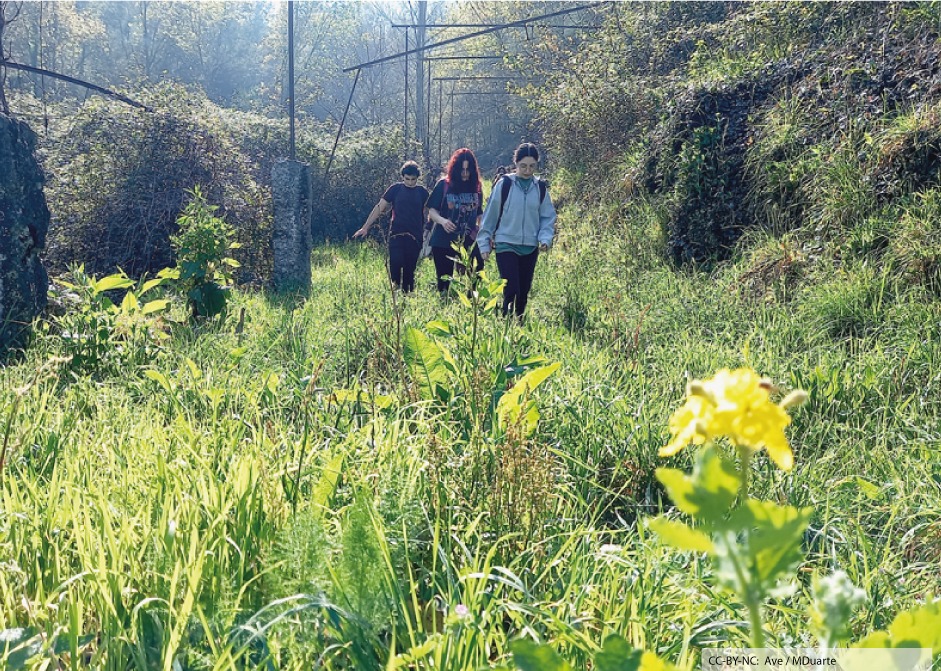
Free Steps between Walls and Hills is a 22 km walk from the center of Guimarães to Citânia de Briteiros.
This walk, promoted by AVE – Associação Vimaranense para a Ecologia, in partnership with The Walking Body, proposes itself as a practice of sensitive inscription in the territory, where the movement of the body is not merely displacement, but a way of thinking, perceiving, and generating relation. Walking becomes here a locative gesture: an act through which space ceases to be a backdrop and asserts itself as a relational field, woven through the interaction between body, environment, memory, and imagination.
The long duration of this route plays a decisive role. It is in the prolongation of effort, in the rhythm of breathing, and in the alternation between silence and conversation that the group transforms into a collective body, attuning speeds, pauses, and levels of attention. The tempo is not imposed — it emerges from mutual listening, from the terrain, the climate, and the texture of the ground. Walking at length becomes an exercise in synchronization between interior and exterior, between physiological time and the time of the landscape.
Between Guimarães and the Citânia de Briteiros, the route crosses walls and hills that are both geographical and symbolic. Each boundary crossed becomes a perceptual threshold; each elevation, a device for reading. The territory presents itself as a living archive where natural and cultural processes coexist, opening to plural interpretations and to narratives in constant reformulation.
In this walk, freedom does not present itself as an abstract or guaranteed condition, but as a situated experience emerging from co-presence, shared attention, and the possibility of walking together. The walk thus affirms itself as an ecological and ethical practice: a way of inhabiting space that requires care, reciprocity, and responsibility toward the multiple forms of life that constitute it. (MD)
Number of participants:
Duration:
Materials:
Meeting point: Gallery Garagem Avenida
Meeting time: